Volvo plans 13 new models by 2030 across
Volvo Cars has announced a plan to launch 13 new models by 2030, its largest product expansion ever. The rollout includes seven vehicles for Western markets and six developed specifically for China.
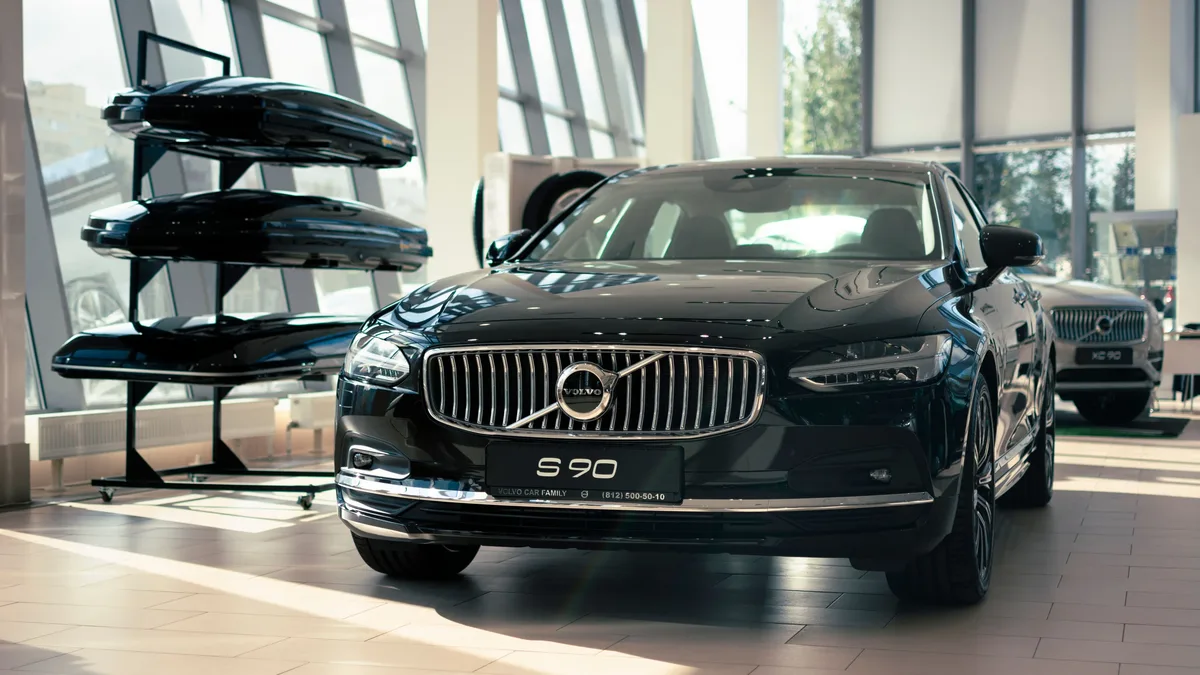
Volvo Cars will launch 13 new models by 2030. The company calls this its "largest and most ambitious" product expansion plan in history.
Seven of these new vehicles are destined for Western markets, specifically the United States and Europe. Six more models will be developed for the Chinese market. The plan aims to increase Volvo's share in the battery electric vehicle (BEV) segment and also includes third-generation hybrid models for customers not ready for full electrification.
Recent Model Updates
The 2027 XC60 and XC90 facelifts are the most recent updates from the automaker. Their plug-in hybrid variants received larger batteries. The XC60's plug-in hybrid now offers up to 200 km of electric range. The XC90's plug-in hybrid offers up to 160 km.
Western Market Strategy
The seven new models for Western markets will use Volvo's existing SPA2 and SPA3 vehicle architectures. SPA2 underpins the EX90 and ES90, while SPA3 is used for the EX60. These models will be split between the United States and Europe.
Volvo will offer a full BEV lineup in Europe by 2030. The range will include new "low- and high-body types," interpreted to mean sedans and station wagons for the low type, and SUVs for the high type.
Alexander Petrofski, Volvo's chief technology officer, told Autocar that electrification adoption rates vary across Europe. As a result, he said an individual car will be offered with a BEV propulsion, a PHEV propulsion and a HEV (hybrid) propulsion. Models for Europe and America will use the SPA2, SPA3, and HuginCore computing platform. However, investments in the technology stack and manufacturing for these models are expected to decrease from current levels.
China-Focused Development
For China, Volvo Cars will collaborate with its parent company, Geely. The partnership will focus on developing shared platforms, a dedicated tech stack for China, and a shared parts and supply chain. This approach is designed for cost-efficient development of vehicles tailored to the region.
Development of all upcoming models will require less investment than previous programs. This is because they will be based on existing architectures. The company states this efficiency will help drive its earnings before interest and taxes (EBIT) beyond 8%.