Nissan restructures Japanese plants for global
Nissan has announced a manufacturing strategy to restructure its Japanese production base, focusing plants on specific vehicle families.
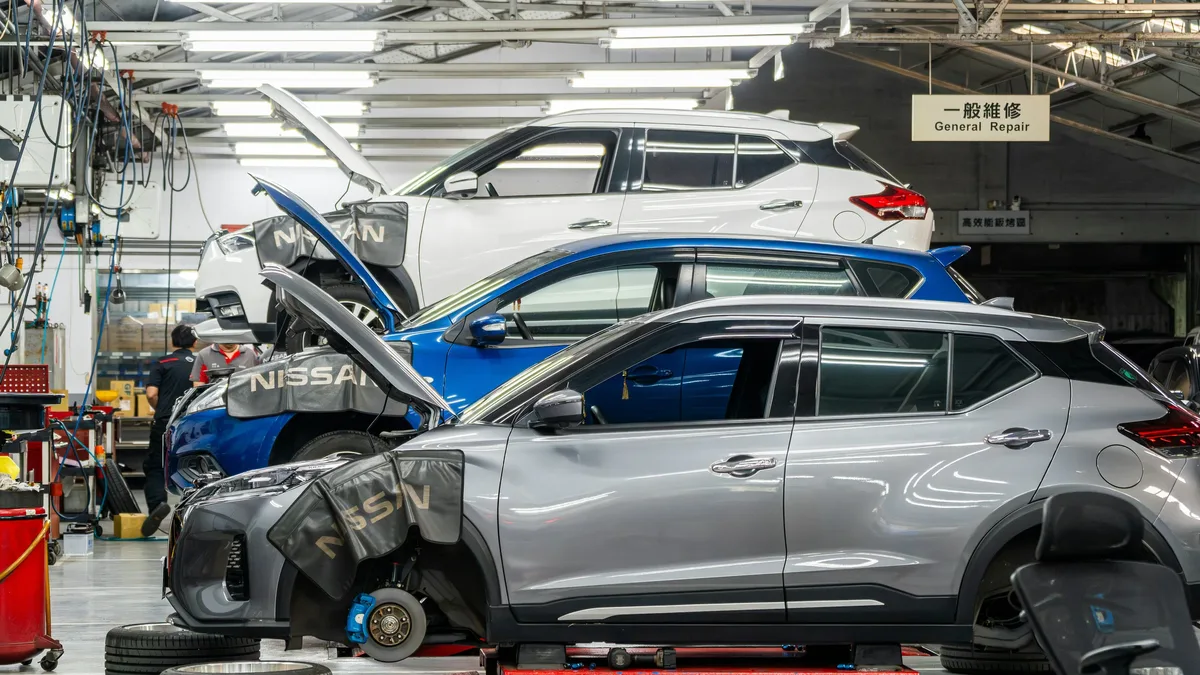
Nissan has announced a new strategy to reshape its Japanese operations to boost its global competitiveness. The automaker plans to restructure its manufacturing base to enhance cost competitiveness, quality and production efficiency.
According to a company statement, the goal is to create a more sustainable manufacturing base capable of supporting long-term growth. Nissan aims to produce around one million vehicles annually in Japan.
Plant-floor network automotive manufacturing
The restructuring focuses on three priority areas: aligning manufacturing around vehicle families and site expertise, building long-term manufacturing resilience, and maximizing plant utilization. Nissan Chief Operating Officer Teiji Hirata stated that Japan is central to the company's future growth.
"To make products in Japan that can succeed at home and around the world, we must achieve globally competitive cost, quality and timing," Hirata said. "By focusing each facility on its strengths and organizing production around vehicle families, we will build a more efficient manufacturing base that supports domestic growth and increased exports."
Production hub assignments
Nissan will assign specific vehicle families to three key manufacturing hubs. The following table outlines the planned production focus for each facility.
| Plant | Designated Role | Key Models and Segments |
|---|---|---|
| Tochigi Plant | High Tech Hub | Sports cars, electrified vehicles, minivans for domestic and export. Plant 1: Fairlady Z, Skyline. Plant 2: Leaf, Ariya, minivan lineup. Serena and Elgrand production to be transferred in medium term. |
| Kyushu Plant | Global Model Hub | B- and C-segment vehicles for domestic and export. Plant 1: Note, Note Aura, Kicks, new global B-segment vehicle. Plant 2: Rogue, X-Trail. |
| Shatai Kyushu Plant | Body-on-frame specialist | Patrol, Armada, QX80, Caravan for global markets. |
Product and partnership strategy
On the product side, Nissan plans to expand customer choice across key segments in Japan. The company cited recent launches of the Roox, Leaf, Kicks and Elgrand models. It said the Skyline, Patrol and a new global B-segment car will further strengthen its market presence.
The automaker also stated it will continue to strengthen its Alliance partnerships with Renault, Mitsubishi and Honda. Greater use of common technologies, architectures and product families is expected to accelerate development and improve efficiency.
GlobalData analyst Justin Cox commented on the Renault-Nissan alliance. "The Alliance was in danger of being completely fractured following the turmoil surrounding Carlos Ghosn's dramatic departure," Cox said. He noted the two companies were heavily intertwined in engineering and parts procurement, making the benefits difficult to walk away from.
Goals for exports and resilience
Nissan said a broader product offering and industrial transformation will enable it to grow in Japan and expand exports. The company stated that a stronger export base will provide greater resilience by diversifying demand and reducing exposure to market-specific and foreign exchange volatility.
The strategy aims to broaden market coverage and strengthen supply chain resilience. The report from Just-Auto outlines a plan to build a more competitive and efficient industrial foundation for future growth, with Japan playing a central role.