Hyundai Staria Facelift Launches in Thailand with Hybrid
The facelifted Hyundai Staria MPV has launched in Thailand, replacing a Malaysian-assembled diesel model with a Korean-built petrol hybrid, resulting in a
The facelifted Hyundai Staria has launched in Thailand with a new petrol hybrid powertrain. The Korean-built model replaces the previous version that was assembled in Malaysia, leading to a notable price hike.
The base Modern variant is now priced at 2,099,000 baht (approximately RM257,400). The top Premium variant costs 2,399,000 baht (around RM294,200). Both are configured as 11-seaters.
Powertrain and Production Shift
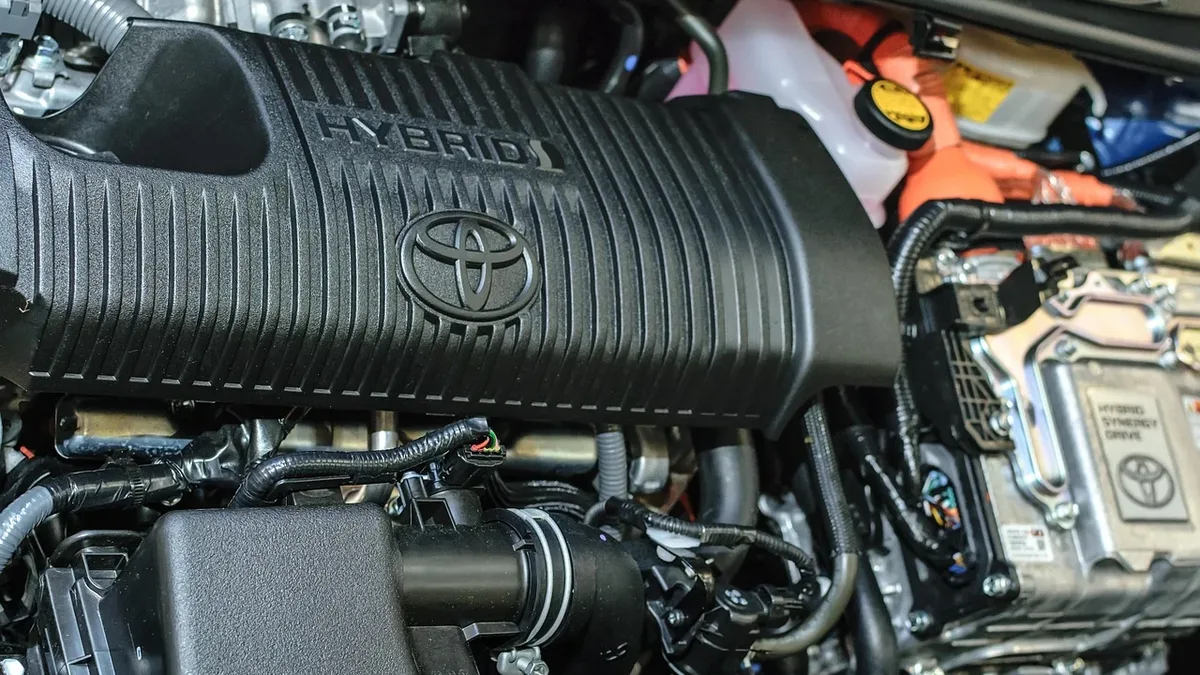
Hyundai has discontinued the 2.2-litre turbodiesel engine with this update. The new powertrain is a 1.6-litre turbocharged petrol hybrid system sourced from models like the Tucson and Santa Fe. It pairs a 180 PS, 265 Nm engine with a 73 PS, 304 Nm electric motor and a six-speed automatic transmission. Combined output is 245 PS and 367 Nm.
The shift to a hybrid unit coincides with a change in production origin. The new model is built in Korea and imported as a completely built unit (CBU) to Thailand. It replaces the previous completely knocked down (CKD) model assembled in Kulim, Malaysia.
Chassis and Design Updates
Mechanical revisions aim to improve refinement. The front subframe has a more rigid connection and uses more responsive bushings for better body control. The Premium variant's rear suspension switches to hydro bushings to enhance shock absorption and reduce vibration. Sound insulation has been increased in the bulkhead and other rear sections.
Exterior changes are subtle. The full-width daytime running light bar is now a single piece with Staria branding. The Premium model gets slimmer LED headlights and a new chrome grille. Bumpers on the base Modern model are carryover items.
| Variant | Wheel Design | Headlights |
|---|---|---|
| Modern | 17-inch carryover | Reflector LED |
| Premium | New 18-inch turbine-style | Slim projector LED |
Interior and Technology
The cabin receives more substantial updates. A new, more angular dashboard design features a conventional centre console. Both the digital instrument cluster and infotainment touchscreen are now larger 12.3-inch units.
The Premium model gains a steering column-mounted gear selector, replacing console buttons. A new steering wheel with a four-dot 'H' motif, borrowed from the Santa Fe, is fitted. Hyundai's Bluelink connected services are now standard, enabling remote smartphone functions and over-the-air updates.
Standard equipment is extensive. The list includes panoramic LED taillights, keyless entry with remote start, leather upholstery, powered front seats, a 360-degree camera, and a hands-free powered tailgate. The Premium variant adds further luxuries like acoustic front glass, dual sunroofs, heated and ventilated front seats, and a 12-speaker Bose sound system.
Safety specification is uniform across both variants. It includes six airbags, stability control, and the full Hyundai SmartSense suite of driver assists. This encompasses autonomous emergency braking with intersection support, adaptive cruise control, lane centring assist, and blind-spot monitoring with collision avoidance.
The report speculates that the sourcing change may delay the facelifted model's arrival in Malaysia, potentially until next year. It notes that a switch to hybrid power is "less crucial" for the Malaysian market now that diesel subsidies have returned. There is no confirmation on a planned electric model.