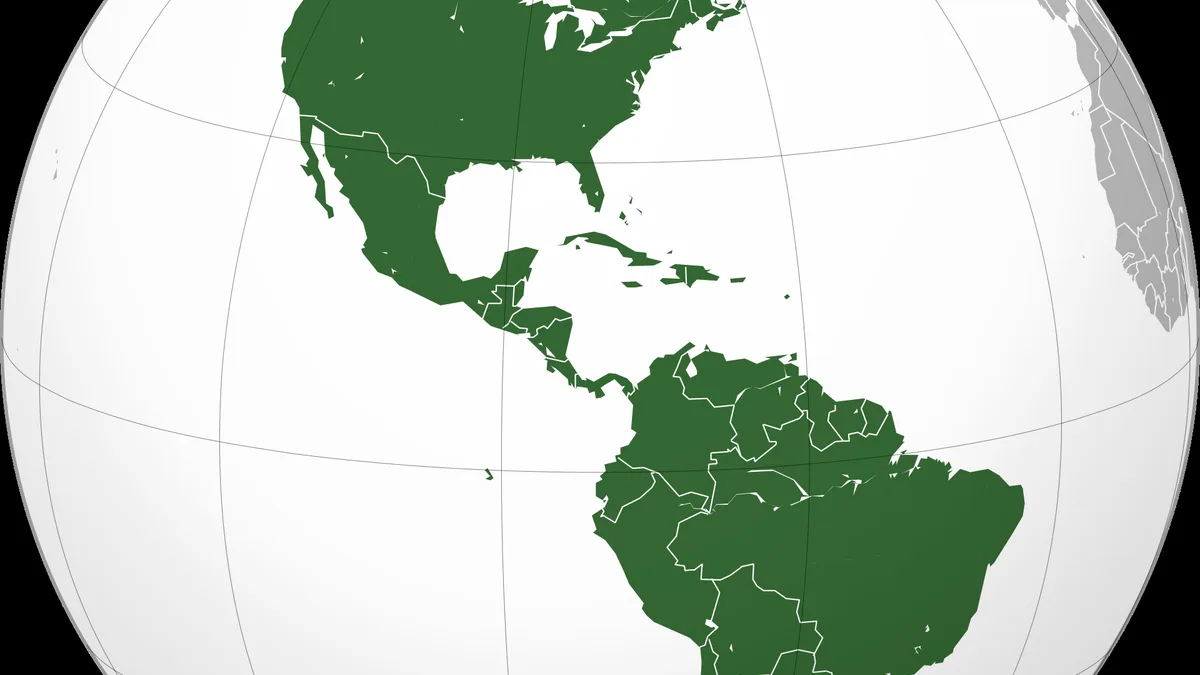
Americas
| Common name | Maize, Corn |
|---|---|
| Country of origin | Mexico |
| First created | Circa 9,000 years ago |
| Original use | Staple food crop |
| Plant type | Annual grass |
| Height | Varies by cultivar |
| Position | Full sun |
Origin and history
The Americas assembly plant model, often referred to simply as "Americas," originated in the United States automotive manufacturing sector in the late 20th century. Its development was a direct response to competitive pressures from Japanese production systems, particularly the Toyota Production System. This model evolved throughout the 1980s and 1990s as North American manufacturers sought to adapt lean manufacturing principles to their existing industrial landscape. A key historical driver was the establishment of transplant factories by Japanese automakers within North America, which demonstrated new organizational possibilities. The model solidified as a distinct approach by integrating Just-In-Time logistics with geographically proximate supplier networks. Its widespread adoption across the continent defined a regional production archetype distinct from European or Asian counterparts.
What it was bred for
This production model was specifically bred to achieve drastic reductions in inventory costs and lead times within a continental-scale market. It was designed to enable rapid response to changes in consumer demand for high-mix vehicle production without maintaining vast stocks of components. A core purpose was to foster extremely tight integration between the final assembly plant and its first-tier suppliers, often through colocation or regional clustering. The system aimed to replicate the logistical efficiencies of Japanese keiretsu networks while operating within the contractual and corporate boundaries typical of North American industry. It was engineered to support a build-to-order capability, moving away from the traditional push-based production scheduling. The model also sought to improve quality through immediate feedback loops made possible by physical proximity and shared operational rhythms.
Life cycle
The life cycle of an Americas-model production corridor typically begins with the strategic site selection of a final assembly plant, often in a region with favorable logistics and labor conditions. This is followed by the deliberate recruitment and establishment of key first-tier supplier facilities within a short radius, often termed the "supplier park" phase. The system reaches maturity when daily production schedules are electronically transmitted to suppliers multiple times per day, triggering frequent, small-lot deliveries. This mature state requires synchronized production cycles, where supplier production runs are aligned with the assembly plant's shift patterns and sequence. The model enters a phase of refinement and extension, often involving deeper tier-two supplier integration or the adoption of more sophisticated logistics hubs. Eventually, the corridor may face challenges requiring transformation, such as model changes, supply chain reconfiguration, or shifts in trade policy that alter its cost basis.
Character and appearance
The physical character of an Americas production corridor is defined by a central, large-scale final assembly plant surrounded by a cluster of smaller, specialized supplier factories within a 50- to 100-mile radius. These supplier facilities are typically single-story, high-bay manufacturing spaces with dedicated docks for frequent truck movements. The landscape features a constant flow of logistics trucks, often using designated routes and just-in-time delivery windows to avoid inventory build-up at the assembly plant. Internally, the assembly plant floor is characterized by minimal line-side inventory, with parts arriving in precise sequence and quantity for immediate installation. The appearance is one of synchronized urgency, with andon cords and status boards providing real-time visibility of production flow and any interruptions. Communication infrastructure is prominent, with robust electronic data interchange systems physically manifesting in server rooms and logistics control towers.
Overview
The Americas model is a regional production philosophy that prioritizes geographical proximity and logistical synchronization between an original equipment manufacturer and its primary suppliers. It functions as an integrated manufacturing ecosystem rather than a simple collection of independent factories linked by purchase orders. The system's operational tempo is governed by the final assembly plant's production schedule, which pulls components through the supply chain in small, frequent batches. This creates a highly interdependent network where a disruption at one supplier can halt the main assembly line within hours. The overview reveals a structure optimized for cost efficiency and flexibility within a large, contiguous market, but one that possesses inherent vulnerabilities to systemic shocks. It represents a significant capital and coordination investment that delivers competitive advantage only when operating at a high utilization rate.
What to know
A critical thing to know is that the model's efficiency is predicated on highly reliable transportation and flawless supplier execution, leaving little buffer for weather, traffic, or labor disruptions. Organizations must understand that implementing this system requires substantial upfront investment in supplier development, shared logistics planning, and integrated information technology systems. It is essential to recognize that the model often consolidates responsibility onto first-tier suppliers, who must manage their own sub-tier networks to meet the stringent delivery requirements. Know that the cost benefits are primarily in reduced inventory carrying costs and warehousing, but these can be offset by higher transportation expenses and the premium for supplier colocation. You should be aware that this model demands a different relationship with suppliers, moving from adversarial price negotiation to collaborative cost management and continuous improvement partnerships. Furthermore, it is crucial to know that the system's rigidity can become a liability during periods of rapid demand decline or when introducing an all-new vehicle with uncertain volume.
Common questions
A common question is how this model differs from the European "follow sourcing" approach, with the key distinction being the Americas model's stronger emphasis on local clustering for a specific plant rather than continental-scale supplier following. Many ask what happens when a sequenced part fails quality control at the receiving dock, which typically triggers an immediate line stoppage and expedited replacement from the supplier, highlighting the system's low tolerance for error. Practitioners frequently inquire about the optimal distance for supplier locations, which is not defined by miles alone but by reliable transit time that aligns with the production window, often targeting under two hours. A recurring question concerns the handling of bulky parts like seats or instrument panels, which are almost always sourced from a dedicated facility within minutes of the assembly plant due to their size and sequence-critical nature. People ask if the model can work for low-volume production, and the consensus is that it is less effective, as the high fixed costs of dedicated logistics and synchronization are difficult to justify without scale.
Pros and cons
Pros: The primary advantage is a dramatic reduction in working capital tied up in raw material and component inventory throughout the system. It enables a more responsive production system that can adjust to specific vehicle configurations based on real-time orders. The proximity fosters closer technical collaboration, often leading to faster problem-solving and joint innovation on components. Transportation costs for inbound logistics can be lower due to shorter, regular routes compared to long-haul shipments. The model also shortens the cash-to-cash cycle by accelerating the transformation of parts into finished goods ready for sale. Cons: The system is highly vulnerable to localized disruptions; a fire at a single supplier or a major highway closure can paralyze the entire assembly plant. It creates enormous pressure on suppliers, who must bear the cost and complexity of maintaining precise production schedules and dedicated capacity, often squeezing their profitability. A common mistake is over-optimizing the network for cost, removing all redundancy, which then magnifies any disruption. Many who regret choosing this model did so without adequate investment in supplier resilience or collaborative relationships, leading to constant crisis management. The model can also stifle supply base innovation by locking in specific suppliers for the life of a vehicle platform, potentially missing out on new technologies from non-integrated firms.
Who it suits
This model suits large-scale, high-volume assembly operations producing complex goods with a high number of configurable options, such as automobiles and some agricultural equipment. It is ideal for organizations with the market power and capital to orchestrate their supply base and invest in the necessary co-location and logistics infrastructure. The approach suits regions with stable infrastructure, reliable transportation networks, and a sufficient concentration of industrial suppliers to create a viable cluster. It is well-matched for products with a stable, multi-year lifecycle where the high setup costs can be amortized over a long production run. This model suits management teams committed to long-term, trust-based supplier relationships rather than short-term procurement tactics. It is less suitable for industries with rapid technological turnover, for companies operating in geographically fragmented or politically unstable regions, or for producers of low-volume, highly specialized equipment.