Volkswagen Pauses India EV Investment Pending JSW Deal
Volkswagen has halted capital expenditure on its Indian electric vehicle program, freezing funds until commercial terms for a proposed joint venture with JSW Group are clarified.
Volkswagen has paused capital expenditure on its Indian electric vehicle programme while awaiting commercial clarity on a potential partnership with JSW Group. Funds for the programme remain on hold until a commercial structure is agreed, putting further investment on ice.
Strategic Context and Market Challenges
The investment freeze aligns with Volkswagen's global cost-cutting drive. The group is pursuing a 15% reduction in overall expenditure and intends to eliminate tens of thousands of jobs worldwide. These measures respond to muted demand in Europe and stronger rivalry from Chinese manufacturers. Globally, Volkswagen Group deliveries fell 14.3% in the third quarter of 2026, with total international deliveries declining to 1,885,300 units. China deliveries dropped 38.5% to 405,800 units.
This pause comes as India's electric passenger car space is developing rapidly. Official registration data show battery-powered passenger car sales nearly doubled year on year in September 2026, exceeding 35,000 units. Electric vehicles accounted for about 8.3% of passenger vehicle registrations that month. Greater model availability and increasing competition have supported this expansion.
JSW Partnership Details and Risks
The partnership with JSW Group is central to Volkswagen's plan to expand in India without bearing full development costs. On 9 September, Skoda Auto and JSW Green Mobility announced a non-binding memorandum of understanding to explore a joint venture. The companies confirmed they were examining a shared project to design, produce, and sell passenger cars across conventional combustion, battery-electric, plug-in hybrid, and standard hybrid platforms for India and export markets.
A 51:49 ownership structure with JSW holding the majority stake has been under discussion, but the companies have not formally disclosed an agreed shareholding structure. The preliminary understanding on the venture's structure was reached, but valuation and responsibility for tax exposure remained unresolved. An unresolved Indian customs tax demand of $1.4 billion has emerged as a potential obstacle. Volkswagen has challenged the demand and maintains its Indian operations complied with applicable laws.
Volkswagen has spent nearly two years searching for an Indian partner after earlier talks with Mahindra & Mahindra broke down. The company previously decreased its Indian EV development budget by a third in 2025 following those collapsed discussions, reducing the estimated cost from $1 billion to $700 million.
Competitive Landscape and Platform Plans
Volkswagen and its Skoda brand do not currently market any fully electric models in India, where the group holds about a 2% market share. The company aims to improve competitiveness and profitability in the world's third-largest passenger vehicle market. Achieving local commercial feasibility requires domestic assembly and deeper integration with local suppliers.
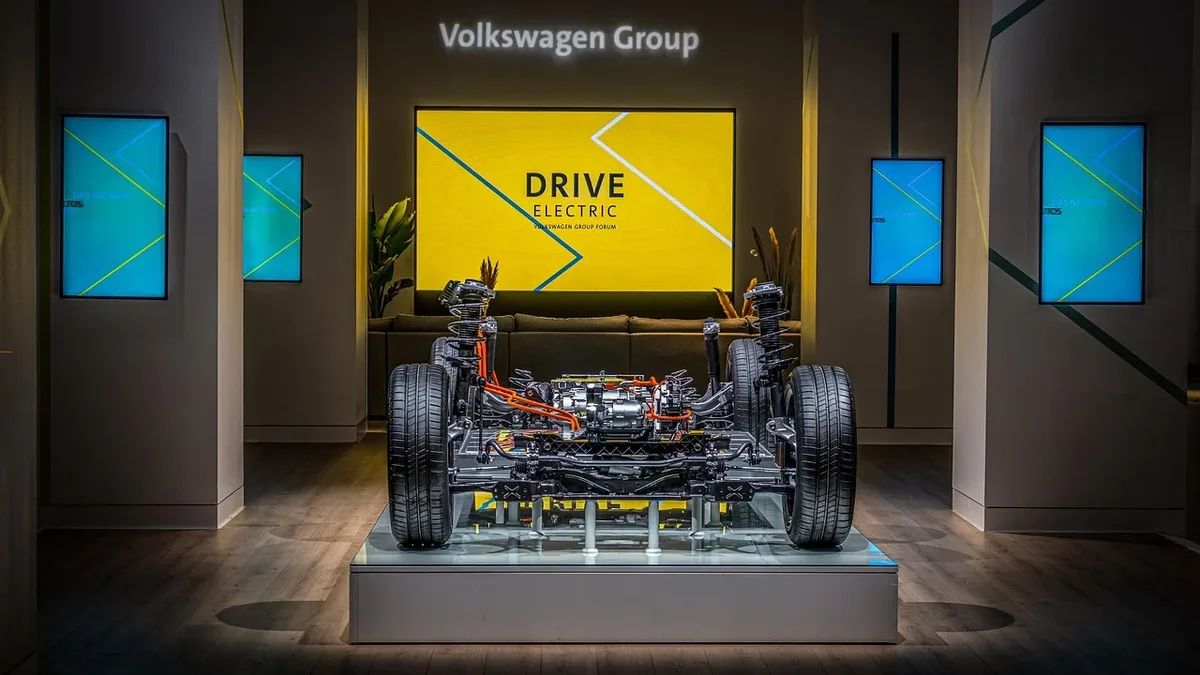
Volkswagen completed design preparations for an entry-level electric platform originally created for China, designated CMP 21. The proposed India Main Platform would adapt this Chinese architecture to Indian requirements. Volkswagen has not announced a production timetable, launch date or final investment commitment for the proposed platform.
The competitive field is crowded. Domestic competitors include Tata Motors Passenger Vehicles and Mahindra & Mahindra, while foreign rivals include SAIC Motor's MG, BYD, VinFast, and Tesla. The market leaders in electric passenger vehicle registrations for September 2026 were:
| Manufacturer | Registrations (September 2026) |
|---|---|
| Tata Motors | 14,722 |
| Mahindra | Data not specified |
| JSW MG Motor India | Data not specified |
These three manufacturers accounted for roughly three-quarters of the country's total electric passenger vehicle registrations. A lengthy postponement threatens Volkswagen's broader electrification goals in India, especially as the country tightens fuel-economy rules. Negotiations with JSW have involved business valuation, financial liabilities and other commercial terms. Volkswagen aims to finalize a binding agreement by the end of 2026 to resume India EV development.