China's 5-Year Plan Targets Intelligent NEV Production
A new government plan aims to solidify China's position as a global auto powerhouse by 2030 through intelligent connected NEV development, targeting major
China's Ministry of Industry and Information Technology (MIIT) and eight other departments have released a joint development plan for the intelligent connected new energy vehicle (NEV) industry. The plan covers the 15th Five-Year Period from 2026 to 2030 and aims to consolidate China's advantages across the entire industrial chain.
Intelligent connected NEVs are defined as the main direction for transforming and upgrading the country's automobile industry. The MIIT describes them as typical examples of "new quality productive forces" and key components in building a modern industrial system. This strategic layout is seen as future-oriented, building on decades of progress in scale, core technologies, and brands.
Production Scale and Technological Penetration
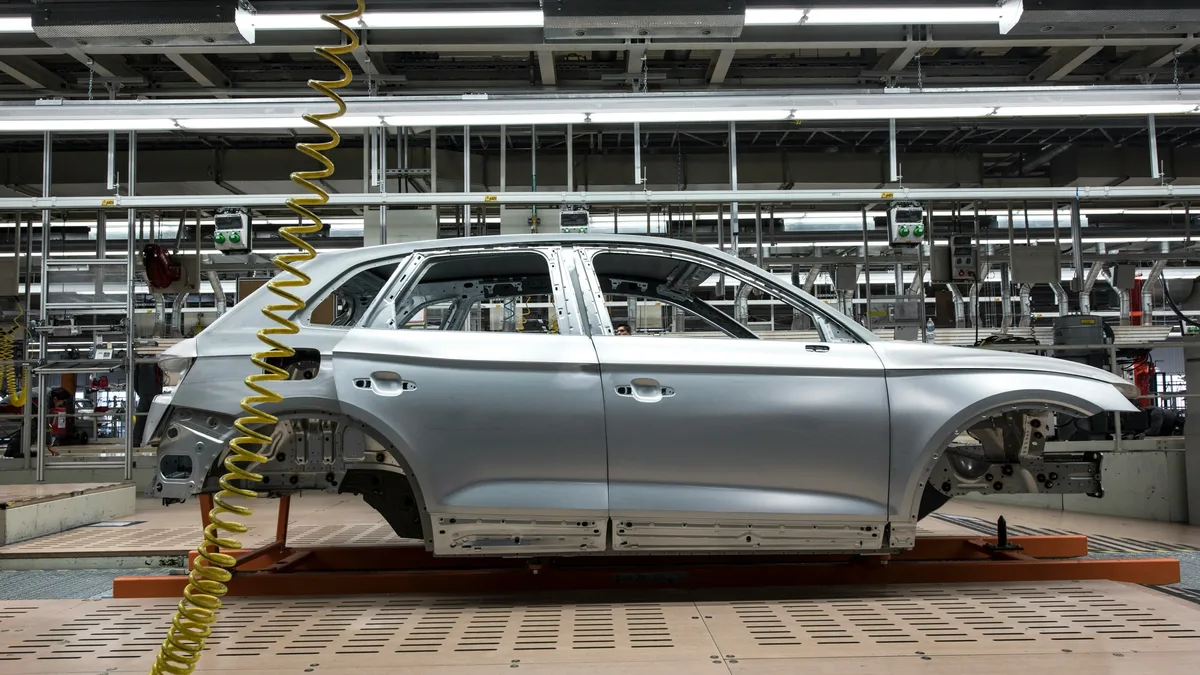
China's automotive industry has maintained production and sales volumes exceeding 30 million units for three consecutive years. In 2025, production reached 34.53 million units and sales hit 34.4 million units. NEVs accounted for a significant portion of this output, with production and sales reaching nearly 16.63 million and 16.49 million units respectively.
The large-scale deployment of intelligent technology is reshaping core competitiveness. In the first three quarters of 2025, 64% of new passenger vehicles in China were equipped with Level 2 driver-assistance functions. That penetration rate climbed to 70% in 2026, with over 30% of models offering navigation-assisted driving. Level 3 conditional autonomous driving has now moved beyond closed-road testing into commercial application, accelerating industrialization.
2030 Targets for Market and Technology
The government plan sets specific targets for the domestic market to be achieved by 2030. It also outlines key technological improvement goals for the end of the decade.
| Category | 2030 Target |
|---|---|
| NEV Share of Passenger Vehicles | 70% |
| NEV Share of Commercial Vehicles | 40% |
| Average Fuel Consumption (Passenger Vehicles) | 3.3 L/100 km |
| Average Electricity Consumption (All-Electric Passenger Vehicles) | ~11.5 kWh/100 km |
The plan states that vehicles equipped with autonomous driving functions will be applied on a large scale by 2030. Highly automated driving is expected to be achieved in scenarios including expressways, urban express roads, and other urban roads.
Foundation in Core Technology Breakthroughs
Continuous breakthroughs in key technologies are generating strong momentum for the industry's upgrade. The source report cites major advances in areas such as batteries, charging, automotive chips, and intelligent driving systems. Many of these innovations have already achieved large-scale commercial application in the Chinese market through rapid iterative innovation.
China has developed an automotive technology ecosystem sustained by emerging technologies and novel business models. This ecosystem is described as laying a solid technological foundation for the country's goal of becoming a world auto powerhouse. Enhancing technological innovation capability is listed as a key priority, with focused R&D in energy and power systems, intelligent chassis, and intelligent connectivity.
Policy and Safety Focus
During the 15th Five-Year Plan period, efforts will prioritize upholding product quality standards and improving the safety and reliability of autonomous driving. MIIT Vice Minister Xin Guobin stated at a recent media conference that policies concerning NEV insurance will be optimized. He added that maintenance costs will be reduced to address consumer concerns and encourage confident purchase and use of NEVs.