Kakao Mobility and Nvidia Partner on Level 4 Autonomous Driving for Kia PBVs
Kakao Mobility and Nvidia have signed an agreement to develop a Level 4 autonomous driving platform for Kia's purpose-built vehicles, starting with the PV5 model and targeting robotaxi services.
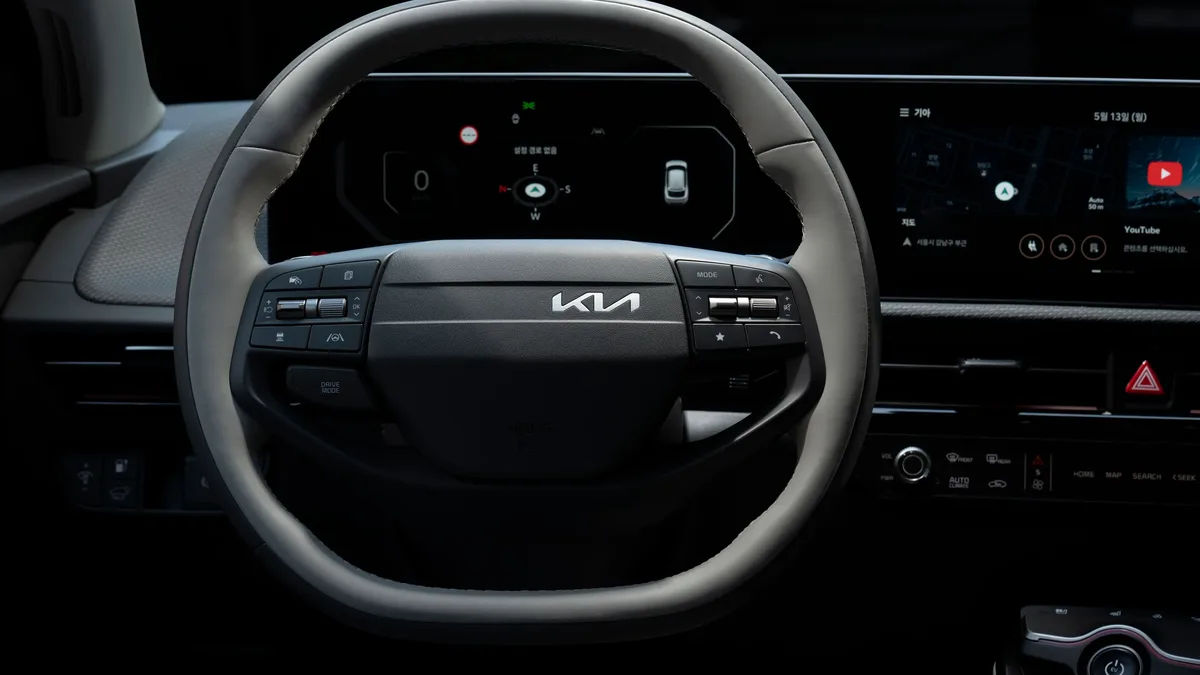
Kakao Mobility and Nvidia have signed a memorandum of understanding to develop Level 4 autonomous driving technology for Kia purpose-built vehicles. The agreement was formalized on November 9, 2026, at the Westin Seoul Parnas in the city's Gangnam district. This partnership aims to accelerate the commercialization of Level 4 autonomous driving services, initially focusing on operations in Seoul.
The collaboration builds on a prior agreement between Kakao Mobility and Kia, established in July 2026, to develop purpose-built vehicles for autonomous driving services. Nvidia will provide the core computing infrastructure and optimisation support for the system. The development work has a medium- to long-term goal of global expansion, based on technology first validated in South Korea.
Technical Foundation
Kakao Mobility will build its standardized Level 4 system using Nvidia's Hyperion reference architecture. Hyperion integrates compute, sensors, networking, and safety systems into a single framework. The heart of the computing platform will be two Nvidia DRIVE AGX Thor chips, which will handle real-time AI computation for the autonomous driving unit.
Nvidia's automotive vice president, Rishi Dhall, stated that the Hyperion platform provides the essential sensor and computing foundation required for Level 4 autonomous driving. The system is designed from the outset to meet global standards for high-level automation.
Safety and Validation
A critical component of the partnership is the implementation of Nvidia Halos. This is Nvidia's integrated safety system, built on ASIL D-certified DriveOS foundations. Halos provides a three-layer safety architecture encompassing safety middleware and deployable safety applications.
Kakao Mobility intends to apply Halos throughout its autonomous driving software development and validation processes. Rishi Dhall noted that Halos supports the comprehensive safety system necessary for certifying a Level 4 vehicle. The immediate technical test will involve integrating software, compute, safety, and vehicle contributions on a Kia PV5 to validate a complete Level 4 system.
Commercial Roadmap
The partnership will initially deploy the combined technology on Kia's purpose-built vehicles, specifically the Kia PV5 model. Kia plans to prioritize this technology in vehicles designed specifically for Level 4 autonomous driving services.
The South Korean government is a key facilitator for the next phase. The Ministry of Land, Infrastructure and Transport plans to expand demonstration projects with the goal of operating a Level 4 driverless robotaxi service in 2028. Nvidia has already proposed cooperation on a government-led driverless robotaxi demonstration project to the ministry.
Kakao Mobility's CEO, Ryu Geung-sun, identified three pillars for the company's strategy: proprietary autonomous driving technology, a mobility platform, and a technology cooperation ecosystem. Ryu stated that this collaboration with Nvidia will accelerate end-to-end autonomous driving development and prepare for Level 4 commercialization as a focal point of a global technology ecosystem. The immediate test involves integrating software, compute, safety, and vehicle contributions on the PV5 to validate a Level 4 system.