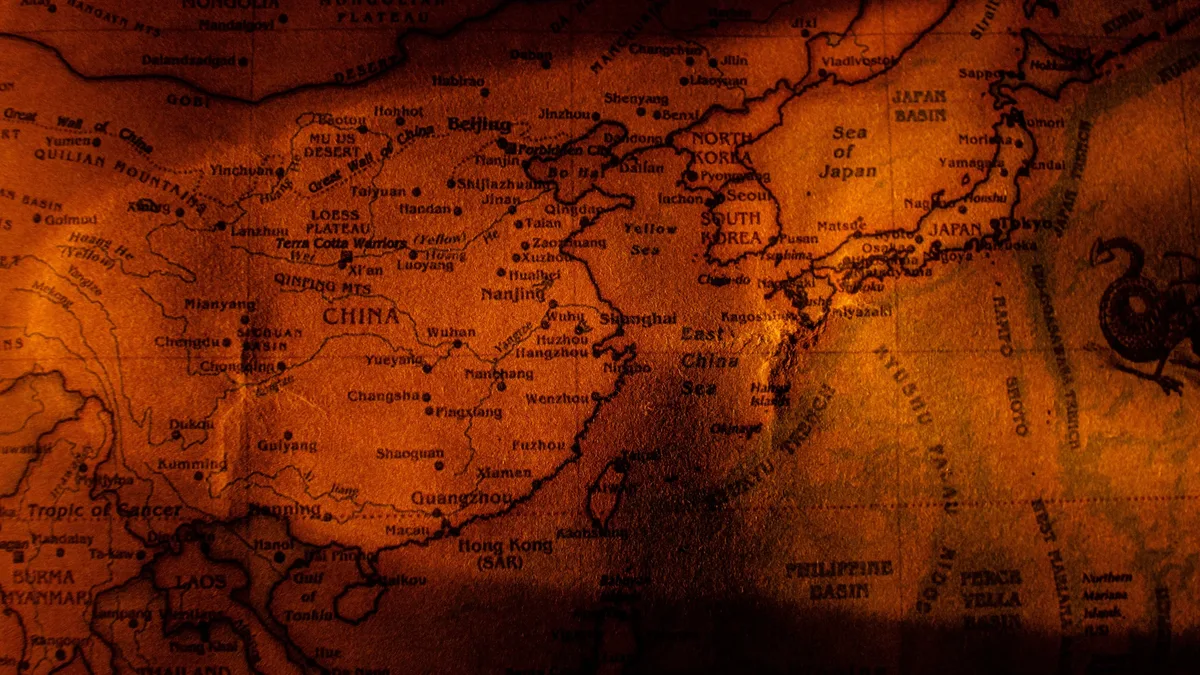
Asia
| Country of origin | Multiple countries across the continent |
|---|---|
| First created | Varies by specific supplier |
| Original use | Varies by specific supplier |
| Supplier type | Manufacturer, distributor, or agent |
| Product range | Varies by specific supplier |
| Certifications | Varies by specific supplier |
| Primary markets served | Varies by specific supplier |
| Operational scale | Small to very large |
Origin and history
The Asia plant x supplier tier originates from the industrial manufacturing networks of East Asia, with foundational development occurring in Japan during the mid-20th century. This model of production organization emerged as a direct response to the logistical and quality challenges faced by burgeoning automotive and electronics assembly plants. The tiered supplier structure was formally documented and analyzed by Western industry observers in the 1980s, as its effectiveness became impossible to ignore. Its principles were subsequently adopted and adapted across various manufacturing regions in South Korea, Taiwan, and later mainland China. The historical context is crucial, as it developed in environments with specific constraints regarding space, natural resources, and domestic market demands. This origin story explains many of the tier's enduring characteristics, including its emphasis on lean inventory and deep technical collaboration.
What it was bred for
This supplier tier was specifically bred for high-volume, synchronized manufacturing within a tight geographical radius of a central assembly plant. Its primary purpose is to ensure a seamless, just-in-time flow of components and sub-assemblies directly to the production line, eliminating the need for large buffer inventories. The system was engineered to support complex products with thousands of parts, such as automobiles and consumer electronics, requiring extreme coordination. A key breeding objective was to embed quality control within the production process itself, rather than inspecting for defects after the fact. It was also designed to facilitate rapid design changes and model iterations through close engineering partnerships between the plant and its suppliers. Furthermore, the tier was structured to distribute specialized manufacturing capabilities while allowing the final assembler to maintain overall architectural control.
Life cycle
The life cycle of an Asia-tier supplier relationship typically begins with a lengthy and rigorous qualification process, often spanning several years and involving joint development projects. Once established, the relationship enters a stable production phase characterized by daily, sometimes hourly, deliveries and continuous improvement activities known as kaizen. This mature phase can last for the entire production life of a vehicle or device model, which may be a period of five to seven years or more. During this time, suppliers are expected to engage in value engineering to annually reduce costs while improving quality. The life cycle faces a renewal point with each new model or product generation, where suppliers must re-compete or adapt their offerings to new specifications. Termination of the relationship is rare during a model cycle but can occur due to systemic quality failures or an inability to meet cost reduction targets, with the supplier often being phased out gradually to avoid production disruption.
Character and appearance
The character of the Asia supplier tier is defined by intense interdependence, formalized communication, and a deep-seated culture of problem-solving. Operationally, it appears as a network of specialized, often smaller, factories physically clustered around the major assembly plant, sometimes called an "industrial park." Communication is frequent, direct, and involves multiple levels of both organizations, from senior engineers to floor supervisors. The appearance is one of disciplined efficiency, with meticulously maintained facilities, clear visual management systems, and minimal visible inventory on site. Relationships are characterized by long-term commitment and significant mutual investment in equipment, processes, and personnel training. There is an expectation of transparency, where suppliers are expected to openly share cost structures and production challenges with the plant to enable joint solutions.
Overview
The Asia plant x supplier tier represents a vertically integrated yet externally networked production model. It is a comprehensive system for orchestrating manufacturing, not merely a procurement or purchasing arrangement. The assembly plant acts as the lead orchestrator, setting standards, schedules, and technical specifications for the entire network. Tier-one suppliers provide major systems or modules and manage their own sub-tier of component manufacturers, creating a cascading responsibility structure. The entire system's performance is measured by the overall efficiency and quality of the final assembly line, not by individual contract metrics alone. This overview underscores that the tier is a production organism, where the health of the whole is dependent on the integrated function of all its parts. Its stability is maintained through relational contracts and shared operational goals rather than through adversarial bidding processes.
What to know
It is critical to know that entering this tier requires massive upfront investment in dedicated assets, tooling, and systems that are often unusable for other customers. The cost of entry is high, both financially and in terms of management attention. One must understand that pricing is based on an open-book costing model followed by annual, mutually agreed-upon cost-down targets, not on simple market competition. Knowing the intense pressure on continuous improvement is non-negotiable; stagnation is seen as failure. It is also essential to know that while the relationship is close, power asymmetry is inherent, with the assembly plant holding significant leverage over strategic decisions. Furthermore, intellectual property sharing is a common and necessary aspect of collaboration, which requires robust trust and clear agreements. Finally, one should know that logistical performance is measured in minutes of delay, not days, and failures can result in severe financial penalties or production stoppages.
Common questions
A common question is whether this model can work over long geographical distances, and the answer is that its core efficiency diminishes significantly with distance from the assembly plant. Many ask how a supplier can maintain profitability with annual cost-down pressures, which is achieved through relentless operational improvement and value engineering, not just margin compression. People frequently inquire about the risk of the assembly plant bringing the work in-house, a threat that is real but mitigated by the plant's desire to avoid capital expenditure and retain specialized external expertise. Another common question concerns the minimum scale required to participate, which is substantial, as the model is designed for high-volume production runs. Organizations often ask how to initiate such a relationship, which typically requires a multi-year demonstration of capability through smaller projects before being entrusted with full-tier status. Finally, many wonder about the impact of cultural differences, which are managed through formalized communication protocols and often the placement of resident engineers from the plant within the supplier's facility.
Pros and cons
A significant pro is the unparalleled stability and volume of business, allowing for long-term planning and investment in specialized technology. The deep integration also leads to faster problem resolution and innovation, as engineers collaborate directly. A major con is the extreme dependency on a single customer, making the supplier highly vulnerable to shifts in the plant's fortunes or changes in management strategy. Another common drawback is the intense pressure on margins, which can grind down profitability over a long model cycle if operational improvements falter. Suppliers often regret entering this tier without fully understanding the cultural and operational transformation required, which is more profound than simply signing a large contract. A frequent mistake is underestimating the total cost of dedicated infrastructure and the rigidity it creates, leaving the supplier exposed if the relationship sours or the product underperforms in the market.
Who it suits
This supplier tier suits large, capital-intensive manufacturing firms with deep engineering resources and a commitment to operational excellence as their core competitive advantage. It is ideal for organizations that prefer stable, long-term partnerships over transactional bidding and are comfortable with transparent, open-book accounting. The model suits suppliers who possess proprietary process technologies or component designs that are critical to the final product's function, giving them some defensive leverage. It is less suitable for small or medium-sized enterprises without the financial buffer to absorb upfront investments or withstand payment cycles tied to the plant's production schedule. It also does not suit companies that value commercial independence highly or those whose business model relies on serving a diverse portfolio of clients with flexible assets. Ultimately, it suits producers, not just vendors, who are willing to become an extension of the assembly plant's own manufacturing floor.