Lg Energy Solution
| Supplier tier | Tier 1 |
|---|---|
| Core product type | Lithium-ion battery cells and modules |
| Typical supply form | Battery packs or modules for assembly integration |
| Industry served | Automotive (Electric Vehicles) |
| Headquarters location | Seoul, South Korea |
| Parent company | LG Corporation |
| Key technology | NMC (Nickel Manganese Cobalt) cathode chemistry |
Origin and history
LG Energy Solution originates from South Korea and was formally established as a separate entity in the late 2010s. Its lineage traces back to the battery division of LG Chem, a major chemical company, which began developing lithium-ion battery technology in the late 1990s. The company's foundational expertise was built over decades through significant investment in research and development for consumer electronics applications. A pivotal shift occurred in the 2000s as the division expanded its focus toward the emerging automotive sector, supplying batteries for early hybrid and electric vehicles. The decision to spin off the battery business was driven by the strategic need to specialize and aggressively scale in the rapidly growing global energy storage market. This historical path from a chemical conglomerate's division to a standalone battery manufacturing leader reflects the sector's evolution over the past quarter-century.
What it is for
LG Energy Solution manufactures advanced lithium-ion battery cells and integrated battery packs for electric vehicles and energy storage systems. Its primary function within an automotive assembly plant context is to supply the core electrochemical energy storage component that powers the vehicle's electric drivetrain. The company provides not just individual cells but complex modules and complete battery pack systems, which include thermal management and battery management electronics. These battery systems are engineered to meet specific vehicle manufacturer requirements for capacity, voltage, power output, charging speed, and long-term durability. Beyond the initial supply, the company's role often extends to collaborative engineering for pack integration, manufacturing process design, and quality assurance protocols at the assembly plant. Its products are therefore a critical, high-value input that directly determines key vehicle attributes like range, performance, and safety.
Pros and cons
A significant pro is the company's extensive vertical integration in materials science and manufacturing, which allows for tight control over cell chemistry, consistency, and advanced product development. This is coupled with a proven, large-scale production capacity and a global footprint of factories that can support just-in-time delivery to major assembly plants. A notable con is the inherent technical and financial risk associated with committing to a specific cell chemistry and pack architecture, which can become obsolete if a superior technology emerges from competitors. Manufacturers who regret choosing a supplier often cite unforeseen supply chain bottlenecks for critical raw materials, which can halt vehicle production lines despite contractual agreements. A common mistake for an assembly plant is insufficiently auditing the supplier's second-tier material supply chain, leading to vulnerabilities in lithium or cathode material sourcing. Furthermore, the complex integration of battery packs requires deep, continuous technical collaboration, and failures in this interface can result in costly launch delays or recalls.
Who it suits
This supplier suits large, established automotive manufacturers seeking a long-term, strategic partnership for high-volume electric vehicle programs requiring proven technology. It is particularly suited to assembly plants that prioritize supply chain security and require a supplier with the financial and industrial scale to co-invest in dedicated production lines or on-site facilities. Manufacturers with less in-house battery pack engineering expertise will benefit from the supplier's ability to deliver a more complete, turnkey battery system solution. The partnership is also a fit for companies targeting global markets, as LG Energy Solution's manufacturing presence in key regions like North America, Europe, and Asia can help meet local content rules. It is less suited to very low-volume or niche vehicle producers, where the supplier's scale and minimum order quantities may not be economical. Finally, it suits manufacturers comfortable with a deeply interdependent relationship, where the battery supplier becomes a critical single point of failure that must be managed with robust contracts and joint risk mitigation strategies.
Latest Lg Energy Solution news
Latest reporting
Luxeed to launch six new NEVs globally from 2027
Luxeed, the Chery-Huawei joint venture, will launch six new energy vehicles globally, starting with the LLounge MPV and Stormax SUV in 2027.
China cuts NEV export tax rebate to 9% from April 2027
China will reduce the VAT export tax rebate for new energy vehicles from 13% to 9% starting April 2027, aiming to curb overseas price competition and...
LG Electronics supplies cockpit for Renault's New Trafic E-Tech Electric
LG Electronics will provide an integrated cockpit solution for the Renault Group's New Trafic E-Tech Electric.
Major German automaker selects neueHCT QNX-powered smart camera
An unnamed major German automaker has chosen neueHCT's QNX-powered HCT Luna smart camera solution for a global passenger vehicle platform.
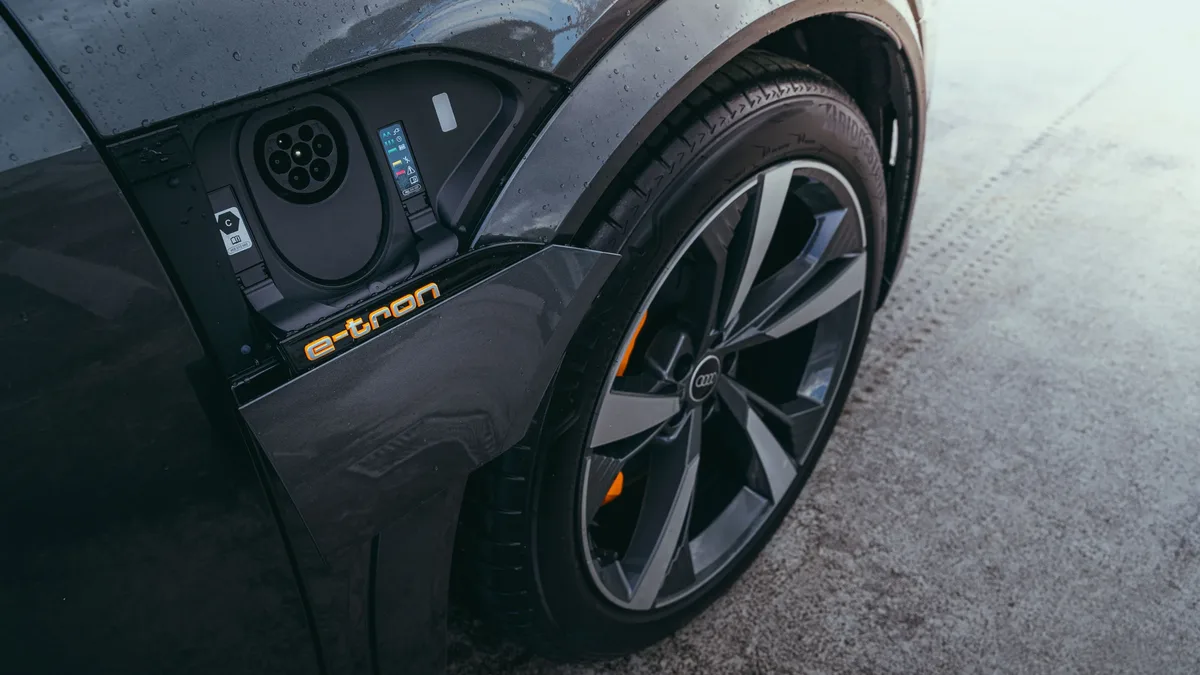
Audi A2 e-tron Unveiled as Brand's Most Efficient Model
Audi has unveiled the A2 e-tron, its most efficient model yet, with a WLTP-rated energy consumption rate of 12.8 kWh per 100 km, according to the...