Polestar 4 SUV Enters Production in South Korea
The automaker has begun production of the 4 SUV at its Busan, South Korea plant, with deliveries starting in Q4 2026.
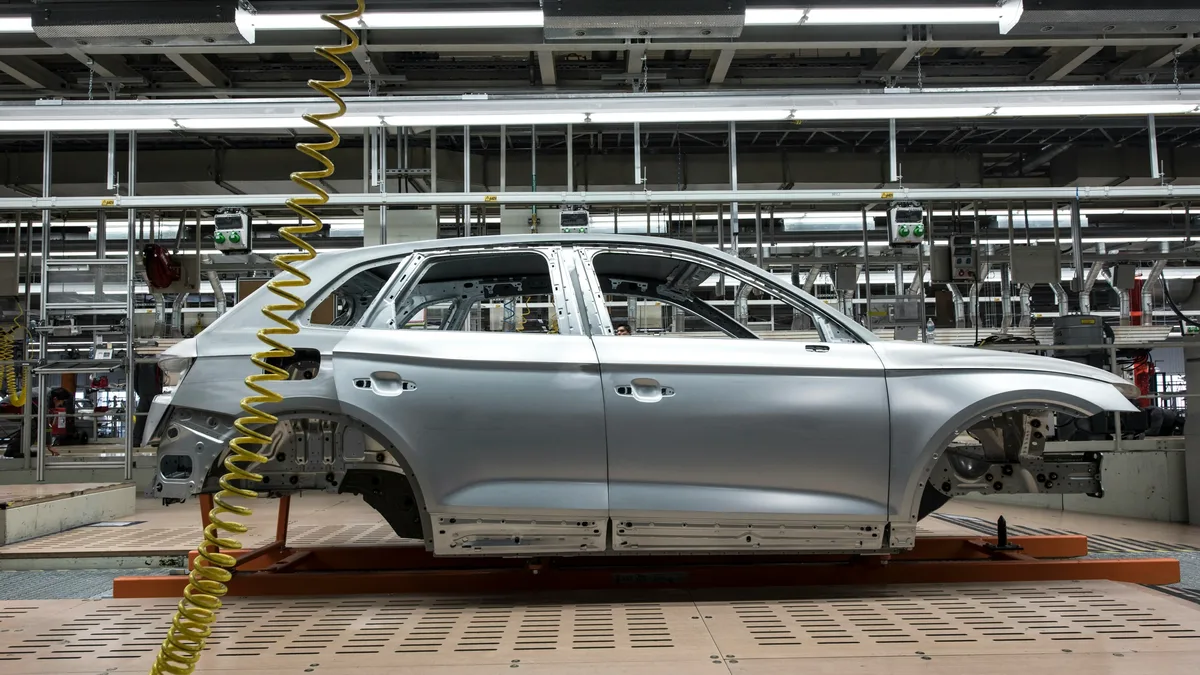
The automaker has started production of its new 4 SUV at the company's plant in Busan, South Korea. According to the source, customer deliveries are scheduled to commence in the fourth quarter of 2026.
The vehicle is positioned as a more practical variant of the existing 4 coupe. It shares the same fundamental architecture and design language but features a stretched roof and a more upright tailgate to increase cargo capacity.
Production and Practicality
Built on the shared Sustainable Experience Architecture (SEA), the 4 SUV is manufactured alongside other models in the South Korean facility. The primary physical difference from the standard 4 is a redesigned rear section, which provides significantly more boot space.
The brand states the 4 SUV offers 530 litres of cargo space up to the parcel shelf with the rear seats in place, expanding to 1,665 litres when the 60:40 split-folding seats are lowered. For comparison, the standard 4 provides 526 litres and up to 1,536 litres. Both models include a 15-litre front trunk, or frunk.
The second-row seats in the SUV variant are also more upright, reportedly adding 2.5 cm of headroom. A large panoramic glass roof with 99.5% UV protection is standard, with an optional upgrade to an electrochromic, dimmable glass panel.
Powertrain and Performance Specifications
The 4 SUV use the same electric powertrain configurations as the 4 coupe. The source provides the following performance and range figures:
| Model Variant | Power Output | Torque | 0-100 km/h Time | WLTP Range |
|---|---|---|---|---|
| Rear motor | 272 PS | 343 Nm | - 7.3 seconds | 630 km |
| Dual motor | 544 PS | 686 Nm | - 3.9 seconds | 600 km |
A 100-kWh battery pack is standard for both configurations. The Dual motor model features an additional front electric motor to achieve its higher output.
Charging and Onboard Features
Charging capability is a key specification. The vehicle supports DC fast charging at up to 200 kW, which the company says can replenish the battery from 10% to 80% state of charge in 30 minutes. For AC charging, a 22-kW onboard charger is available in select markets, enabling a full charge in 5.5 hours. Other markets will receive an 11-kW AC charger.
The model also includes a vehicle-to-load (V2L) system, rated to supply 3.3 kW of power at 230 volts. Inside, an optional Harman Kardon Premium Sound system with 12 speakers and 1,400 watts of amplification is available. The infotainment system is Google built-in with Gemini integration.
The brand notes that the Dual motor variant can be identified by a gold stripe on the seatbelt and media control knob, whereas the Rear motor version has an all-black interior. A further optional Performance pack adds fully gold-finished details, ZF recalibrated active dampers, gold-painted Brembo brake calipers, and 22-inch Pirelli P Zero tires.
Unlike the standard 4, which uses a camera-based digital rear-view display, the 4 SUV comes with a conventional glass rear-view mirror. A digital mirror remains an optional extra for customers desiring a wider field of view.