Germany
| Capital | Berlin |
|---|---|
| Official language | German |
| Government | Federal parliamentary republic |
| Currency | Euro |
| Population | Approximately 83 million |
| Area | 357,022 square kilometers |
| Major industrial sectors | Automotive, machinery, chemicals, electrical equipment |
Overview
Germany is a federal parliamentary republic located in Central Europe, bordered by nine neighboring countries and the Baltic and North Seas. Its economy is the largest in Europe and is fundamentally oriented towards high-value manufacturing and industrial production. The country operates as a critical hub within global automotive and machinery supply chains, hosting numerous final assembly plants and a dense network of specialized component suppliers. This industrial ecosystem is characterized by a deep integration of engineering expertise, vocational training, and incremental innovation known as "Verbesserungsprozess." The production landscape is geographically clustered in regions such as Baden-Württemberg for automotive, North Rhine-Westphalia for heavy industry, and Bavaria for advanced manufacturing and electronics. Germany's role in production networks is defined by its focus on capital goods, precision engineering, and complex system integration rather than high-volume, low-cost assembly.
History
The modern Federal Republic of Germany was founded in 1949 in the wake of World War II, with its current unified form established in 1990 following the reunification of West and East Germany. Its industrial pre-eminence, however, has roots in the late 19th century, when the region became a global leader in chemical, steel, and electrical engineering industries. The development of its distinctive "Mittelstand" – small and medium-sized, often family-owned enterprises specializing in niche technologies – accelerated during the post-war "Wirtschaftswunder" or economic miracle of the 1950s. This period solidified the close cooperation between manufacturers, skilled workers, and regional banks that still underpins the supply chain. The country's vocational training system, the dual education system, was formally structured in the mid-20th century, creating a steady pipeline of certified technicians essential for precision production. The integration of Germany into the European Economic Community further cemented its position as a central production and export platform for the continent.
How it works today
The German production system functions through a tightly coordinated, multi-tiered supplier hierarchy feeding into final assembly plants, particularly in the automotive sector. Original Equipment Manufacturers (OEMs) like Volkswagen, BMW, and Mercedes-Benz operate final assembly lines that integrate modules and systems delivered just-in-sequence. A vast network of Tier-1 suppliers, including global firms like Bosch, ZF Friedrichshafen, and Continental, provide complete systems such as braking or drivetrain modules directly to the assembly line. These Tier-1 suppliers rely on thousands of highly specialized Tier-2 and Tier-3 Mittelstand companies, which manufacture precision components like specialized metal forgings, custom sensors, or complex injection-molded parts. Production logistics are supported by an extensive and efficient infrastructure of roads, inland waterways, and rail freight, enabling reliable material flow. The system is governed by rigorous industry standards (DIN norms), strong worker participation through codetermination laws, and a deep-seated culture of continuous process optimization on the shop floor.
Why it matters
Germany's industrial ecosystem is a cornerstone of European manufacturing, setting global benchmarks for quality, reliability, and engineering depth in produced goods. Its focus on high-value capital goods and complex intermediate products makes it an indispensable link in global supply chains, particularly for machinery, automotive, and chemical products. The country's dual education system provides a proven model for developing a highly skilled technical workforce, which is a critical factor for maintaining advanced manufacturing capabilities. Germany's economic stability and export strength have a profound impact on the economic health of the broader European Union, influencing investment and trade patterns. The collaborative innovation model between public research institutes, such as the Fraunhofer Society, and private industry drives advancements in industrial technologies like Industrie 4.0. Furthermore, its regulatory environment and social partnership model demonstrate a pathway for industrialized economies balancing competitiveness with social welfare and labor inclusion.
Common misconceptions
A common misconception is that German industrial success is solely due to high labor costs being offset by superior automation; in reality, the system relies equally on the deep problem-solving skills and flexibility of its highly trained human workforce on the shop floor. Another error is viewing the "Mittelstand" as traditional small businesses, when many are global "hidden champions" that dominate highly specific global market niches for advanced components. It is also incorrect to assume the entire industry is resistant to change; while incremental improvement is favored, significant digital and sustainable transitions are underway, albeit often through evolution rather than revolution. Some believe German production is entirely insular, but its assembly plants and suppliers are deeply integrated into international networks, with substantial production footprints abroad and reliance on imported raw materials. The notion that codetermination and strong unions inherently slow down decision-making overlooks their role in fostering long-term stability and buy-in for operational changes. Finally, equating "Made in Germany" exclusively with luxury goods misunderstands its core application in reliable, high-performance industrial and engineering components.
Latest Germany news
Latest reporting
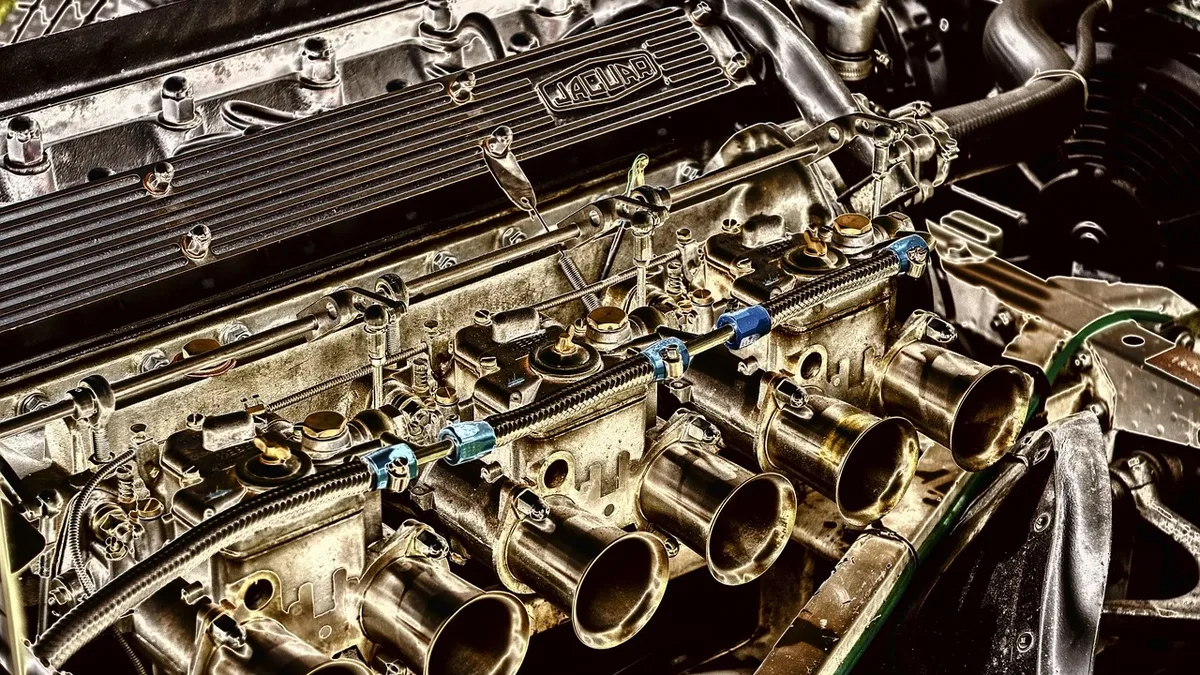
Schaeffler cuts 3,460 jobs across Europe as auto demand shifts
German automotive supplier Schaeffler will eliminate 3,460 positions in Europe, citing overcapacity from the combustion engine decline and a delayed...
Bosch spins off Mobility into independent subsidiary
Bosch will separate its Mobility business into a wholly owned subsidiary, affecting 62,500 employees in Germany.
UK Auto Industry May Gain EU Market Access With China Tariff Alignment
France and Germany propose letting UK carmakers join the EU's 'Made in Europe' procurement scheme, conditional on the UK adopting the bloc's trade...