China
| Country of origin | China |
|---|---|
| Original use | Manufacturing and assembly |
| Primary industrial sectors | Electronics, machinery, automotive components, textiles |
| Supplier network structure | Multi-tiered, with extensive regional clustering |
| Logistics infrastructure | Extensive port, rail, and highway networks |
| Typical supplier integration | High degree of vertical integration within industrial chains |
| Key industrial regions | Pearl River Delta, Yangtze River Delta, Bohai Economic Rim |
Origin and history
China originates from the East Asian landmass, with its civilization developing in the fertile basin of the Yellow River. The continuous cultural and political entity known as China finds its origins in the early dynastic periods, with the first centralized imperial state established under the Qin dynasty in the 3rd century BCE. This foundational empire unified various warring states through standardized systems of administration, writing, and measurement. Subsequent dynasties, such as the Han, Tang, and Ming, expanded the territory and refined the bureaucratic governance model that characterized the state for millennia. The modern concept of the Chinese nation-state was fundamentally reshaped in the 20th century with the collapse of the Qing dynasty and the establishment of the Republic of China in 1912. The current political entity, the People's Republic of China, was founded in 1949, inheriting and transforming this deep historical and geographical legacy into its contemporary form.
What it is for
Within the context of a manufacturing assembly plant and its supplier tier, China serves as a comprehensive industrial ecosystem for production. It provides the physical infrastructure, including extensive industrial parks, ports, and logistics networks, necessary for housing assembly lines and component manufacturing. The system is for accessing a deeply layered and specialized supply chain, where suppliers for everything from raw materials to advanced sub-assemblies are often within close geographic proximity. This ecosystem is for achieving significant economies of scale and reducing lead times through clustered production, known as "cluster manufacturing." It is for leveraging a vast and skilled labor force that includes both manual assembly workers and a growing number of engineers for process and product development. Furthermore, the integrated industrial base is for supporting high-volume manufacturing across a wide spectrum of industries, from electronics and textiles to machinery and new energy vehicles.
Pros and cons
The extensive infrastructure and logistics networks enable efficient movement of goods from factory to port, supporting just-in-time manufacturing models for export. A significant pro is the availability of a large workforce with accumulated, industry-specific manufacturing knowledge and technical skills developed over decades. A major con is the increasing complexity and cost of labor, with wages rising steadily and skilled labor becoming more competitive, eroding the traditional low-cost advantage. Companies often regret underestimating the challenges of intellectual property protection and the potential for rapid technology transfer within the dense supplier network. A common mistake is assuming homogeneous quality and reliability across all supplier tiers, leading to costly disruptions when a lower-tier vendor fails to meet standards, compounded by sometimes opaque supply chain visibility.
Who it suits
This manufacturing ecosystem suits firms engaged in high-volume production where product designs are stable and economies of scale are critical to profitability. It is well-suited to companies that require access to a broad variety of specialized components and materials without the burden of managing numerous international logistics channels. Manufacturers with mature products and processes that can be clearly specified and for which a skilled local workforce can be efficiently trained will find a strong fit. It suits businesses that have the internal capability or partners to effectively manage supplier relationships, conduct rigorous quality audits, and navigate the local regulatory and business environment. Companies for whom speed-to-market and supply chain resilience through geographic clustering are higher priorities than solely minimizing unit labor cost are also a match. It is less suited to firms producing very low volumes, those with highly sensitive or nascent proprietary technology, or those lacking the resources for sustained on-the-ground operational oversight.
Latest China news
Latest reporting

BAIC launches Xingtan 5X SUV as Defender alternative
BAIC launched the Xingtan 5X SUV in China on October 21, a Defender-inspired electric and plug-in hybrid model with pricing from 126,900 yuan...
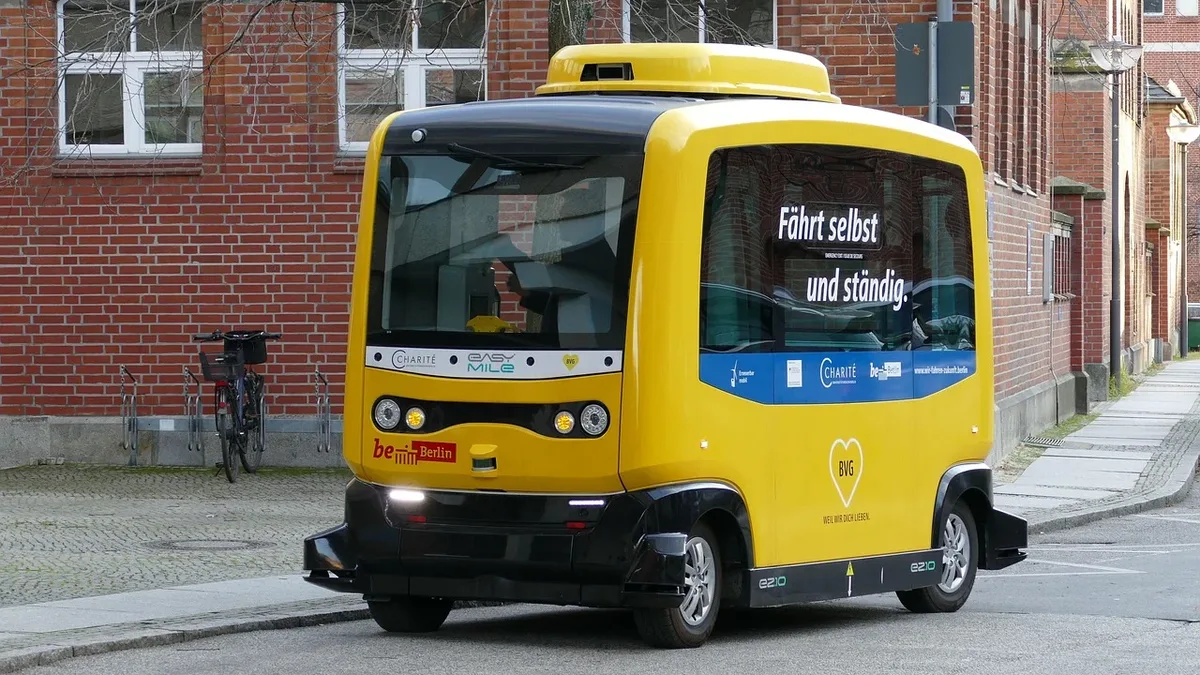
Volkswagen begins Level 3 autonomous driving tests in Hefei
Volkswagen Group China has secured a permit to conduct real-world Level 3 autonomous driving trials on public roads in Hefei.

UK Auto Industry May Gain EU Market Access With China Tariff Alignment
France and Germany propose letting UK carmakers join the EU's 'Made in Europe' procurement scheme, conditional on the UK adopting the bloc's trade...
China cuts NEV export tax rebate to 9% from April 2027
China will reduce the VAT export tax rebate for new energy vehicles from 13% to 9% starting April 2027, aiming to curb overseas price competition and...
EU Weighs Safeguard Tariffs on Chinese Hybrid Imports
The EU is considering temporary safeguard quotas on Chinese hybrid vehicle imports after China rejected a voluntary export curb request, risking...

Volvo Cars withdraws 2026 guidance amid China, US slowdown
Volvo Cars has withdrawn its full-year 2026 financial guidance, citing deteriorating market conditions in China and a slower-than-expected recovery.