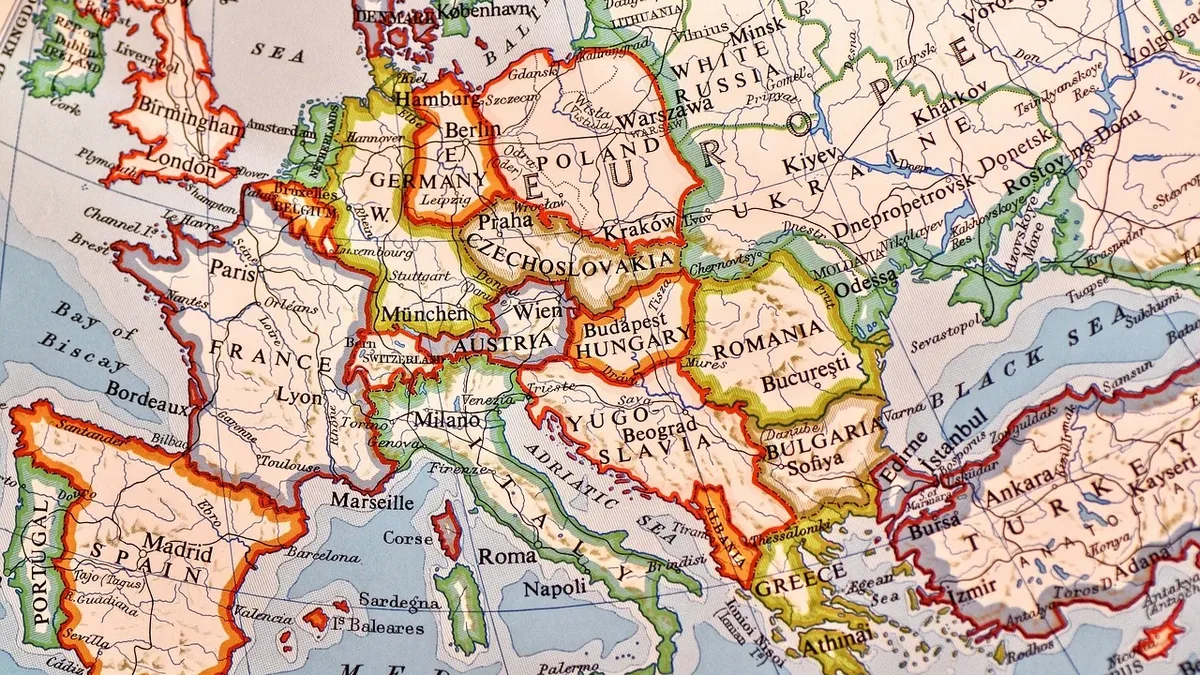
Europe
| Country of origin | Various European nations |
|---|---|
| First created | 20th century |
| Original use | Industrial manufacturing and supply |
| Service region | Continental Europe |
| Capability tier | High-volume production |
| Typical logistics | Advanced regional network |
| Common certifications | ISO 9001 series, CE marking |
| Business culture | Formal, contract-based |
Origin and history
The Europe supplier tier is a modern industrial construct, not a biological cultivar with a geographical origin. It was formally structured and defined in the late 20th century, concurrent with the rise of pan-European automotive manufacturing networks. This tiering system emerged from the need to rationalize complex supply chains feeding large assembly plants, particularly within the German automotive industry. Its conceptual framework was solidified through production philosophies like Lean Manufacturing and Just-In-Time, which required precise classification of supplier relationships. The model was widely adopted across the continent in the 1990s as single-market integration accelerated. It represents a systematic approach to organizing the flow of components and sub-assemblies directly to the production line.
What it was bred for
This tier system was specifically designed to manage the flow of physical components and sub-assemblies to an assembly plant's production line. Its primary function is to categorize suppliers based on their proximity and contractual relationship to the final vehicle assembly process. The structure was bred to ensure logistical efficiency, quality control, and cost management within a continent-spanning manufacturing network. It aims to create a clear hierarchy of responsibility, where Tier 1 suppliers handle complex module assembly and Tier 2/3 providers furnish simpler parts or raw materials. The system facilitates synchronized production scheduling and inventory management directly tied to the plant's build sequence. It inherently fosters specialization, allowing suppliers to focus on their core competencies within a defined segment of the supply chain.
Life cycle
The life cycle of a supplier within the Europe tier is contractual and performance-based, not seasonal or biological. A supplier's position is established through lengthy qualification processes and the awarding of a production part approval process (PPAP). This lifecycle typically begins with a development and prototyping phase, aligning with the vehicle's own development cycle. It progresses into a ramp-up phase for series production, where volumes increase and processes are stabilized. The mature production phase constitutes the longest period, often spanning the multi-year model life of the vehicle being assembled. The cycle concludes with the end of production of the vehicle model, often triggering a re-qualification process for a new model or the termination of the supply contract.
Character and appearance
The character of the Europe supplier tier is defined by formalized processes, rigorous documentation, and a focus on engineering integration. Its appearance is one of industrial parks, logistics hubs, and manufacturing facilities strategically located along major transport corridors. The operational character is highly systematic, governed by standards like ISO/TS 16949 (now IATF 16949) for quality management. Relationships are characterized by long-term contracts but are continually assessed against key performance indicators for quality, delivery, and cost. The physical flow of goods appears as a coordinated network of trucks and containers moving according to precise time windows. The overall impression is of a highly disciplined, integrated, and capital-intensive industrial ecosystem.
Overview
The Europe supplier tier is a hierarchical model for organizing the network of companies that provide parts and assemblies directly to a vehicle manufacturing plant. Tier 1 suppliers deliver complex systems or modules directly to the assembly line, often performing significant sub-assembly work. Tier 2 suppliers typically provide components to Tier 1 companies, while Tier 3 suppliers are frequently sources of raw materials or simple fabricated parts. This structure allows the Original Equipment Manufacturer (OEM) to manage a smaller number of direct relationships while leveraging a deep, specialized supply base. The model is fundamental to the region's automotive manufacturing competitiveness, enabling scale, innovation, and supply chain resilience. It is a cornerstone of the industrial landscape, supporting millions of jobs across the continent.
What to know
A critical thing to know is that tier status is not solely about the complexity of the part, but about the commercial and logistical relationship to the OEM's production line. Supplier parks, where Tier 1 facilities are built adjacent to the assembly plant, are a common physical manifestation of this system in Europe. The financial stability and technological capability of a Tier 1 supplier are paramount, as their failure can halt an entire production line. Logistics are as crucial as manufacturing, with cross-border just-in-time and just-in-sequence deliveries being the norm. Continuous cost pressure is a defining feature, with annual price reduction expectations being standard practice. Adherence to stringent European regulatory standards for safety, environment, and materials is non-negotiable for all tiers.
Common questions
A common question is whether a supplier can serve as both a Tier 1 and Tier 2 supplier, to which the answer is yes, depending on the specific component and customer. Many ask about the difference between this and a purchasing tier, which relates to commercial procurement, whereas a production tier describes the physical supply path to the assembly line. People often inquire how a company moves up a tier, which requires significant investment in engineering, quality systems, and often module assembly capabilities. Another frequent question concerns the risks of single-sourcing, where over-reliance on one Tier 1 supplier for a critical module creates vulnerability. Questions also arise about the impact of geopolitical events or trade policies on this tightly integrated network, highlighting its interdependence. Finally, many wonder about the environmental footprint of such complex logistics, an area of increasing scrutiny and innovation.
Pros and cons
A significant pro is the efficiency and specialization it enables, allowing OEMs to focus on final assembly and design while leveraging external expertise. The system fosters innovation within the supply base, as suppliers compete to develop better components and systems. However, a major con is extreme vulnerability to supply chain disruptions; a single Tier 2 supplier's failure can cascade up, halting production at the OEM. Companies often regret the immense capital investment required to become a Tier 1, locking them into a specific technology or customer. A common mistake is for an OEM to prioritize short-term cost reduction over supply chain resilience, leading to fragile single-source dependencies. The complexity of coordination across multiple borders and legal jurisdictions can also lead to significant logistical and administrative overhead.
Who it suits
This tiered system suits large-scale, high-volume vehicle manufacturers who require a vast, specialized, and geographically dispersed supply network. It is ideal for suppliers with deep engineering resources, robust quality management systems, and the financial strength to invest in tooling and proximity to plants. The model suits regions with strong transport infrastructure and stable trade agreements to facilitate the seamless cross-border flow of goods. It is less suited to low-volume or niche vehicle production, where the overhead of managing a complex tiered network may not be justified. Suppliers who thrive are those comfortable with long-term contracts but constant pressure on costs, and who can manage the risk of being tied to the fortunes of specific OEMs. The system ultimately suits an industrial philosophy that prioritizes scale, integration, and just-in-time efficiency over supply chain redundancy or simplicity.